

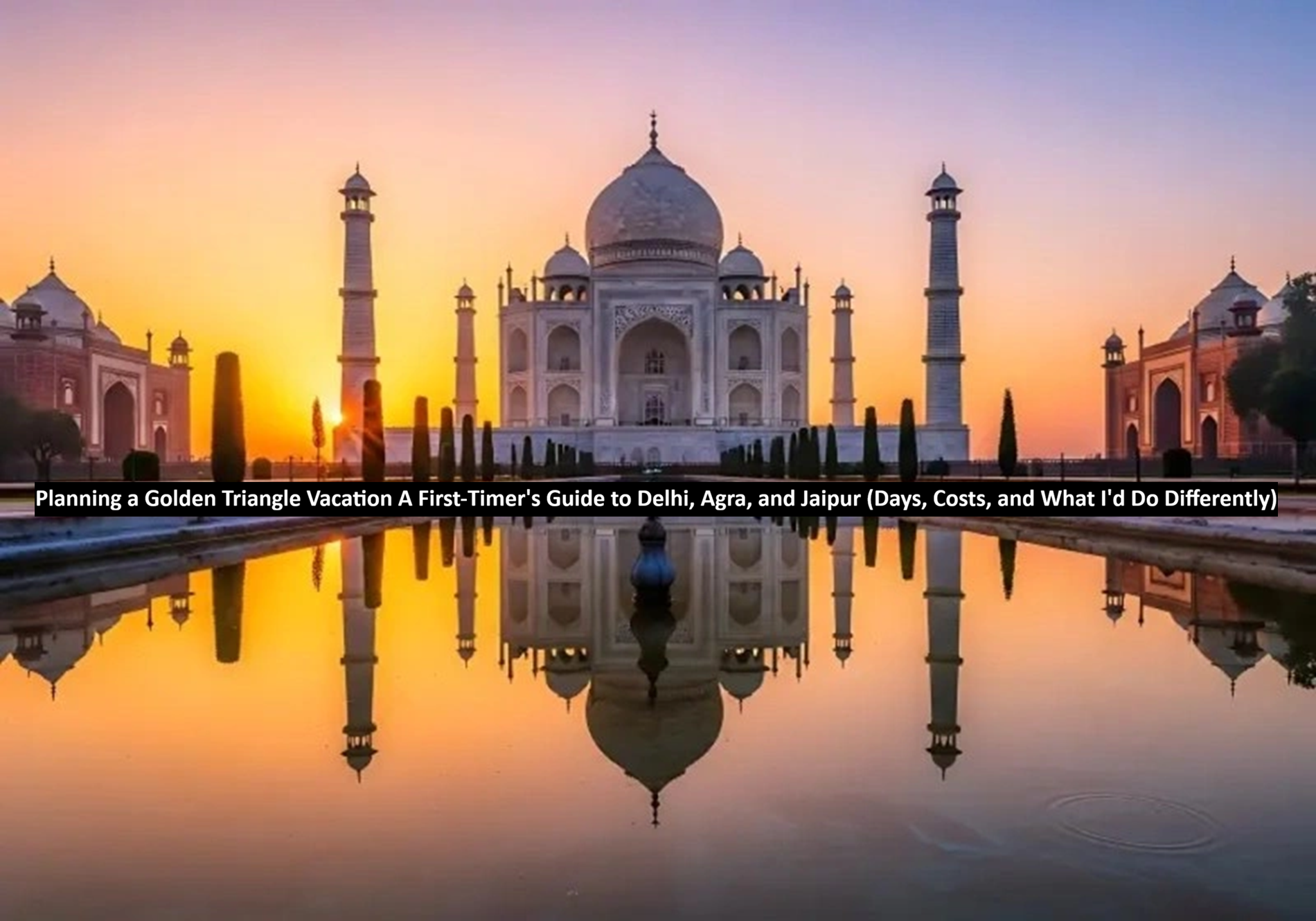
The first time I saw the Taj Mahal, it was just before sunrise and I was running on three hours of sleep, the wrong shoes, and a cup of chai I had bought at a stall outside the East Gate. I had spent six weeks planning the trip — three cities, six days, two long drives, and an itinerary I had moved around in a spreadsheet so many times it looked more like a Rubik’s cube than a holiday. And in that moment, watching the marble catch the first light of the day, I realised something I would not have admitted out loud the week before: most of what I had agonised over in the planning didn’t matter. A few things did, and a few things mattered far more than I had given them credit for.
This is the actual plan I used for a Golden Triangle vacation across Delhi, Agra, and Jaipur, what it cost me in real numbers, the three planning mistakes I would not repeat, and an honest answer to the question every first-time visitor to India quietly asks: is it worth the work to do this yourself, or is it worth handing the logistics to someone else?
Why the Golden Triangle Is the Best First Trip to India
There is a reason the Delhi–Agra–Jaipur route is the most-booked tour in India. In roughly 720 kilometres of driving, you cover three UNESCO World Heritage Sites, three distinct eras of Indian history, and the country’s most photographed monument. Delhi gives you the layered chaos of a capital that has been ruled by everyone from the Mughals to the British. Agra gives you the Taj Mahal, plus the Mughal fort that is genuinely worth half a day on its own. Jaipur gives you the royal heritage of Rajasthan without yet committing to the longer Rajasthan circuit.
For a first-time visitor, the route is also forgiving. You are never more than a few hours from a major hospital, English is widely spoken at hotels and major sites, and the tourist infrastructure is well established. The Incredible India travel resource is worth reading before you book anything, not because anything dramatic happens, but because reading the official guidance makes you realise how routine most of the journey actually is. The Golden Triangle is the gateway, not the gauntlet.
The 6-Day Route That Actually Works
After comparing about a dozen itineraries online, I settled on a 6-day, 5-night structure. The temptation is to compress this into 4 days, and a lot of tour operators will sell you that version. I would not recommend it. Each city is worth more than a single day, and the drives are long enough that a 4-day version means you spend roughly a third of your trip in a car.
- Day 1: Arrive Delhi, recover from the flight, gentle evening walk through Connaught Place.
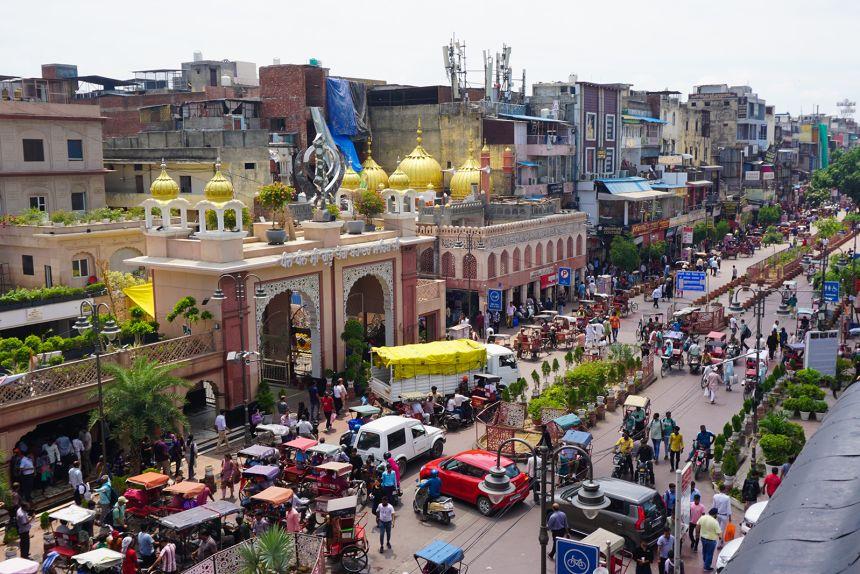
- Day 2: Old Delhi (Jama Masjid, Chandni Chowk, Red Fort) in the morning, New Delhi (India Gate, Humayun’s Tomb, Qutub Minar) in the afternoon.
- Day 3: Drive Delhi to Agra (~4 hours on the Yamuna Expressway). Afternoon at Agra Fort, sunset view of the Taj from Mehtab Bagh across the river.
- Day 4: Sunrise at the Taj Mahal — the only time the marble light is genuinely magical. Drive to Jaipur (~4–5 hours) with a stop at Fatehpur Sikri en route.
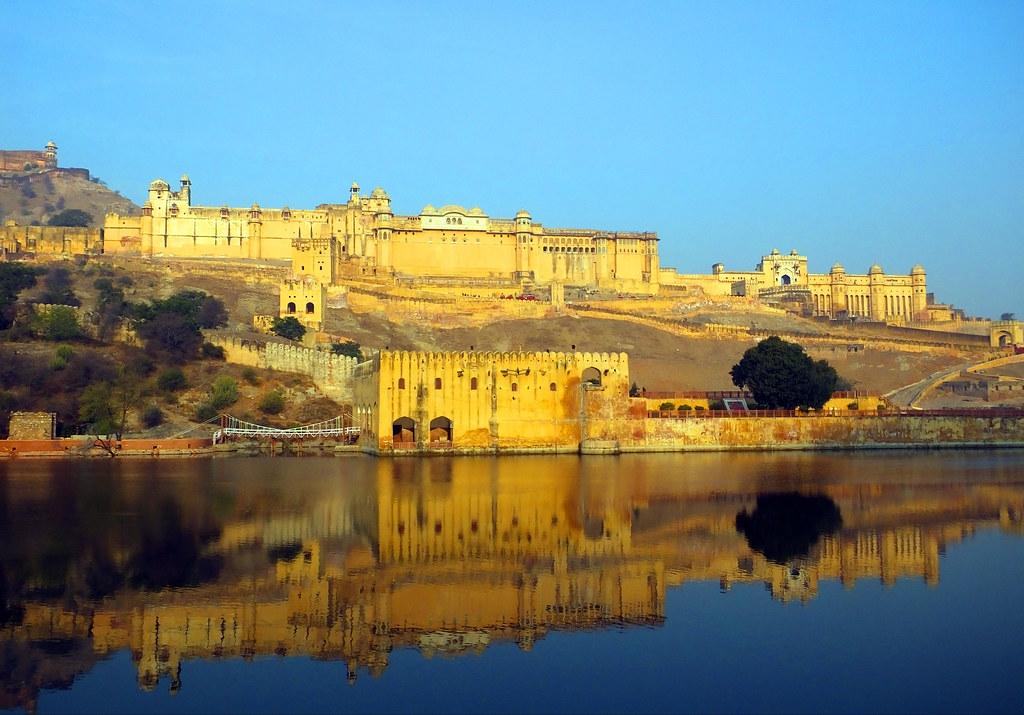
- Day 5: Jaipur — Amber Fort in the morning, City Palace and Jantar Mantar in the afternoon, Hawa Mahal in the late afternoon.
- Day 6: Final breakfast in Jaipur, transfer back to Delhi by road (~5 hours) or fly out from Jaipur airport.
If I were doing it over, I would add a seventh day in Jaipur. The city deserves more time than the standard tour allows, and an unscheduled day in Rajasthan turned out to be one of the best parts of a different trip I took the following year.
Honest Budget Breakdown — What a Golden Triangle Vacation Actually Costs
I am sharing the real numbers because almost every blog I read before my trip either rounded up to sound impressive or rounded down to sound thrifty. This is what I spent across six days as one traveller, in INR with USD equivalents. The numbers assume mid-range hotels, second-class AC trains where I used them, private car between cities, food at a mix of street stalls and restaurants, and the foreigner-rate monument tickets that are significantly higher than what Indian residents pay.
| Category | INR | USD | USD |
| Hotels (5 nights) | ₹14,000 | ~$168 | 2 Delhi, 1 Agra, 2 Jaipur — mid-range |
| Private car (6 days) | ₹12,000 | ~$144 | AC sedan with driver — the single biggest line item |
| Monument entry fees | ₹4,500 | ~$54 | See foreigner pricing breakdown below |
| Food | ₹4,200 | ~$50 | Mix of street food and sit-down meals |
| City guides (3 cities) | ₹3,000 | ~$36 | English-speaking, half-day each |
| Local transport (auto, tips) | ₹1,500 | ~$18 | Autos within cities, driver tips |
| SIM card & data | ₹700 | ~$8 | Airtel tourist SIM at Delhi airport |
| Buffer & souvenirs | ₹2,000 | ~$24 | Block-printed textiles, a small marble inlay piece from Agra |
| Total (on the ground) | ₹41,900 | ~$502 | Per person, mid-range, 6 days |
Two notes on the total. First, this does not include international flights or visa — those vary too much by origin city to generalise. Second, this is the mid-range version. A budget version comes in closer to ₹25,000 ($300), mostly by switching to public buses, hostels, and skipping the private car. A luxury version, with 5-star hotels and a chauffeur-driven SUV, runs ₹80,000 ($960) and up. Most first-time visitors land in the mid-range bracket because the difference in stress between a hostel dorm and a clean 3-star hotel after a 14-hour flight is, by my count, worth the extra ₹15,000.
Monument Entry Fees Are Higher Than You Think
The single line item that surprises most first-time visitors is monument tickets. India operates a tiered pricing model where foreign tourists pay significantly more than Indian residents, and the numbers add up faster than you would expect across three cities.
- Taj Mahal: ₹1,100 for the complex + ₹200 for the main mausoleum chamber = ₹1,300 total (~$15.50) for foreigners. Children under 15 are free.
- Agra Fort: ₹650 (~$8) for foreigners on weekdays, ₹600 on Fridays.
- Amber Fort, Jaipur: ₹1,000 (~$12) for foreigners under the January 2026 revised pricing.
- City Palace, Jaipur: ₹700+ depending on the sections you visit.
- Hawa Mahal: ₹200 for foreigners.
- Qutub Minar, Delhi: ₹600 for foreigners.
A useful workaround in Jaipur is the composite ticket — ₹1,500 (~$18) for foreigners covers Amber Fort, Jantar Mantar, Hawa Mahal, Albert Hall Museum, and several others over two consecutive days, which usually saves around ₹500 if you visit three or more sites. I’d recommend booking the major monument tickets in advance through the official ASI ticketing portal — there is a small online discount, and you skip the entry queue, which at the Taj before sunrise can be 30 to 45 minutes.
Three Things I’d Plan Differently Next Time
First, I underestimated the Delhi to Agra drive. The Yamuna Expressway is good and the trip can be done in around 3.5 to 4 hours in light traffic, but light traffic is rare. I left Delhi at 9 in the morning and arrived in Agra well after lunch, which meant I had to drop Mehtab Bagh from the day. Leave Delhi at 6am or stay in Delhi for an extra evening and drive at 5am the next day. The tip about leaving early applies to every Indian intercity drive, and it’s covered well in the broader travel tips and guides here on Holiday Takeoff — worth reading before you book anything.
Second, I did not book the sunrise Taj Mahal slot in advance. The Taj opens at sunrise and the best photography window is the first 45 minutes after the gates open. Tickets at the counter that morning are usually fine, but during peak season the queue starts forming around 5:30 am and the first 100 visitors get a noticeably better experience than the next 1,000. Book online the night before.
Third, I booked a hotel in Jaipur that was 20 minutes from the old city. On paper it looked fine. In practice, every short outing turned into a 40-minute auto round trip, and by the second day I was choosing not to do things because the logistics of getting there were tiring. Pick a Jaipur hotel within walking distance of the old city — somewhere near Hawa Mahal or Johari Bazaar is ideal.
Group Tour, Custom Itinerary, or DIY?
By the end of my planning, I had spent so much time on logistics that I started to question the value of doing it myself at all. So here is an honest comparison of the three ways most people do this trip, based on what I learned.
DIY — book your own trains, hotels, drivers, and monument tickets — is the cheapest path and the one that gives you the most flexibility. It is also the one that consumes the most time before the trip. Plan on 30 to 40 hours of research, booking, and re-booking across the six weeks before departure. Worth it if you enjoy the planning, or if you are confident navigating Indian booking platforms.
Custom private tour — a tour operator builds the itinerary, books the hotels and transport, and provides a driver and city guides, but you choose the dates, destinations, and pace. This is the middle option, and the one most international visitors land on. You give up some flexibility, but you get back the planning weeks and most of the booking stress. Pricing in 2026 typically starts around ₹17,000–₹20,000 ($200–$240) per person for the 6-day Golden Triangle, all-inclusive.
Group coach tour — fixed dates, fixed itinerary, shared coach with 20 to 40 other travellers. Cheapest of the three. Fastest to book. But you move at the pace of the slowest person in the group, you eat where the tour operator has a kickback, and you cannot linger anywhere. Worth it only if your priority is the lowest possible price.
Read: How to Plan a Last Minute Holiday Without Breaking The Bank
Would I Recommend the Golden Triangle to First-Time India Travellers?
Without hesitation. The route works for a reason. Three of India’s most iconic cities, three UNESCO sites, and a circuit short enough to do in under a week. You leave with a fair sense of what India is, an obvious answer to why people come back, and a phone full of photos that will give you something to talk about for months. It is, in the most genuine sense, the right first trip.
Final Thoughts
The Golden Triangle delivers exactly what the brochures promise: three of India’s most iconic cities, three UNESCO sites, and a route that genuinely works for first-time visitors. The only part it doesn’t promise is the planning fatigue — matching driver to hotel to monument entry slot across three cities is its own quiet job, and one I underestimated.
If I were doing this again with less time on my hands, or planning it for parents or first-timers who’d rather skip the logistics entirely, I would seriously consider booking a planned Golden Triangle vacation instead, which bundles the route, private transport, and English-speaking city guides into one arrangement. The trip is unforgettable. The spreadsheet doesn’t have to be.